

Private Car Service for Corporate Retreats: 2026 Guide

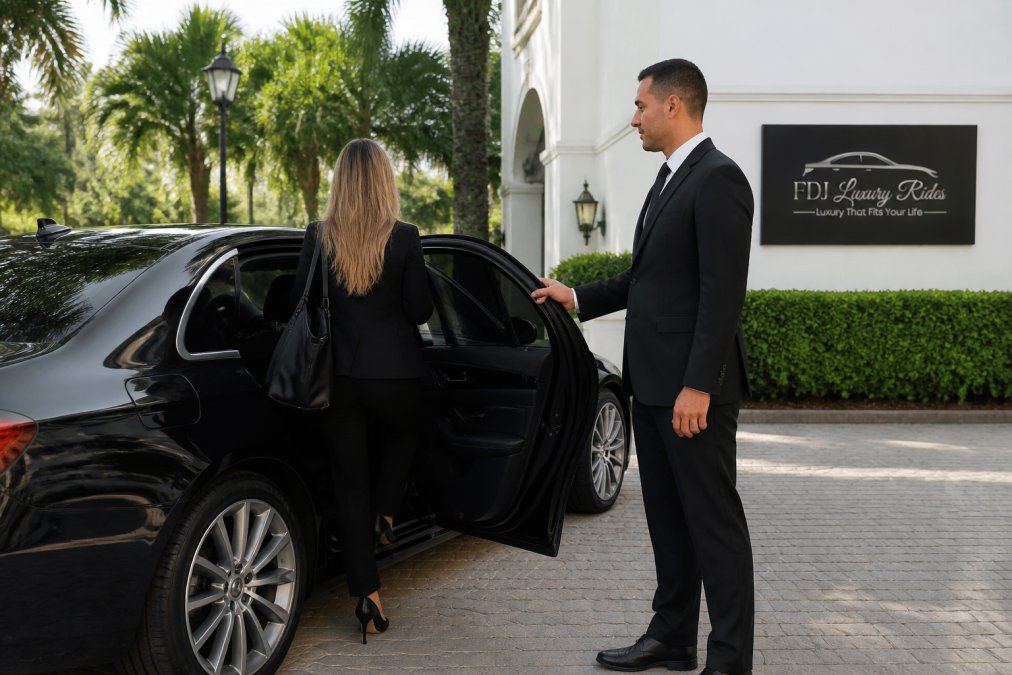
Table of Contents
- Why Private Car Service for Corporate Retreats Beats Rideshare
- Corporate Event Transportation Logistics: Planning the Fleet
- Luxury Airport Transfer for Corporate Groups Arriving in Florida
- Hiring Private Drivers for Multi-Day Events: What to Expect
- How Corporate Retreat Pricing Works: Hourly vs. Fixed-Rate
- Safety Standards, Insurance, and Vetting Your Provider
- Technology and Sustainability: What Smart Planners Ask For
- Conclusion: Booking the Right Private Car Service for Your Retreat
- Frequently Asked Questions
Last Updated: September 12, 2026
Why Private Car Service for Corporate Retreats Beats Rideshare
A private car service for corporate retreats assigns a dedicated, commercially insured chauffeur and vehicle to your group for the duration of an event, rather than matching each ride on demand (fmcsa.dot.gov). At FDJ Luxury Rides, we’ve watched that distinction decide whether a retreat opens smoothly or starts with a stranded executive. Rideshare apps are built for one-off trips, not for fifteen people landing at staggered times. When your VP of Sales is standing curbside with a keynote laptop and no driver in sight, the cost difference stops mattering.
Reliability and On-Time Performance
Rideshare availability fluctuates with driver supply, surge pricing, and weather. A reserved chauffeur is confirmed in advance, tracked in real time, and dispatched by a coordinator who knows your itinerary.
- Flight tracking adjusts pickup times automatically when arrivals shift
- Backup vehicles are assigned before your event, not scrambled for after a cancellation
- One point of contact handles every leg, so nobody on your team becomes a dispatcher
The most common failure we see: planners book rideshare for the airport leg and a charter for the venue leg, then discover the two vendors have no shared schedule. One delayed flight cascades into a missed dinner reservation for the whole group.
Client Privacy and Professional Chauffeur Standards
Confidentiality matters when executives discuss strategy in transit. Professional chauffeurs are vetted, background-checked, and trained to keep conversations private, drive defensively, and dress to match the occasion (nhtsa.gov). A rideshare driver is an unknown variable every single time. For client-facing retreats, that inconsistency is a liability, not a convenience.
Corporate Event Transportation Logistics: Planning the Fleet
Corporate event transportation logistics means matching vehicle type, capacity, and timing to a group’s actual movement pattern across an event, not just booking one car per person. Get this wrong and you’ll pay for empty seats or leave people behind.
Matching Vehicle Types to Group Size
| Group Size | Recommended Vehicle | Best For |
|---|---|---|
| 1-3 passengers | Executive sedan or SUV | Individual VIP airport pickups |
| 4-6 passengers | Executive SUV | Small leadership teams |
| 7-14 passengers | Sprinter van | Mid-size departments, multi-day events |
| 15-40 passengers | Motorcoach | Full-company offsites, venue transfers |
A fleet mix usually works better than a single vehicle type. Send sedans for early-arriving executives, then run a larger vehicle for the group transfer to the venue. The rule of thumb most coordinators use: size the vehicle to the smallest leg of the day, not the largest, and add a second vehicle for peak moments rather than paying for empty seats all day.
Multi-Leg and Complex Itinerary Coordination
Retreats rarely follow one route. Airport to hotel, hotel to offsite venue, venue to dinner, dinner back to hotel, then repeat for three days. Each leg needs its own timing buffer and driver assignment. Build the itinerary as a single document your transportation provider can work from, with arrival windows rather than exact minutes.
The mechanics that separate a smooth retreat from a chaotic one:
- Arrival clustering. Group inbound flights into windows (for example, everything landing within 90 minutes gets one vehicle rotation) instead of dispatching a car per flight. This is the single biggest lever on both cost and curb congestion.
- Deadhead and repositioning time. A vehicle that drops a group at a venue isn’t free the moment it leaves, it needs time to reposition. Build 15-20 minutes of buffer between legs so the next pickup isn’t late.
- Driver blocks vs. per-leg dispatch. For middle days, an hourly driver block keeps one vehicle and chauffeur on call between sessions. For arrival and departure days, per-leg dispatch is usually more efficient because the schedule is fixed.
- A single point of contact. One coordinator who owns the whole itinerary prevents the classic failure where the airport vendor and the venue vendor never talk to each other.
Ask your provider to assign the same chauffeur to the same executive across all days. Familiarity cuts pickup time and eliminates the “who is this driver” friction that slows every departure.
The most common multi-leg failure: planners book the airport leg with one company and the venue leg with another, then discover the two schedules don’t share a timeline. One delayed flight cascades into a missed dinner reservation for the whole group. One provider, one itinerary, one coordinator.
Building the Itinerary Document
A working itinerary document has four columns: time window, passenger group, vehicle, and pickup/drop-off point. Keep it in a shared file your provider can edit, and update it the night before each day. Providers who work corporate retreats regularly will build this document for you, ask for it in the proposal stage so you can see how they think about your event before you sign.
Luxury Airport Transfer for Corporate Groups Arriving in Florida

A luxury airport transfer for corporate groups starts with flight tracking. When a group lands across several flights, the transportation plan has to absorb delays without stranding early arrivals or rushing late ones. Real-time flight monitoring lets a chauffeur adjust the pickup window automatically, so nobody waits curbside wondering if their ride forgot them.
For groups arriving at Tampa International Airport, the practical answer is staged pickups: assign one vehicle per arrival cluster, hold a standby vehicle for delays, and give every traveler a direct contact number. FDJ Luxury Rides builds this into every corporate account, with a driver who meets travelers inside the terminal rather than at a distant lot.
Hiring Private Drivers for Multi-Day Events: What to Expect
Hiring private drivers for multi-day events typically means reserving chauffeurs by the hour or by the day, with the same driver or team assigned across the full event. Expect a written itinerary, confirmed vehicle assignments, and a single coordinator reachable throughout.
- Day one covers arrivals and a welcome transfer
- Middle days run on an hourly chauffeur block, on call between sessions
- Final day handles departures, often with staggered flight times
- Overnight and standby hours are quoted separately, so ask upfront
The thing nobody tells you: multi-day pricing rewards flexibility. If your schedule is loose, hourly blocks cost less than fixed transfers for every leg.
How Corporate Retreat Pricing Works: Hourly vs. Fixed-Rate
Corporate retreat transportation pricing generally follows two models: hourly chauffeur booking, where you reserve a driver and vehicle for a block of time, or fixed-rate pricing, where each route has a set price agreed in advance. Hourly suits events with shifting schedules. Fixed-rate suits predictable airport runs and single-destination transfers. Coordinating these logistics often becomes a central component of professional corporate event planning, where the complexity of managing multiple ground transportation streams necessitates a broader strategic approach to retreat management.
The decision framework most planners use:
| Scenario | Better Model | Why |
|---|---|---|
| Staggered airport arrivals | Fixed-rate per leg | Each pickup is a known route with a known endpoint |
| Sessions that run long or short | Hourly block | You pay for time, not for a schedule that keeps changing |
| Dinner with an open end time | Hourly block | A fixed-rate transfer can’t wait for a table that runs late |
| Single venue-to-hotel run | Fixed-rate | Predictable distance, predictable timing |
What Actually Drives the Number
Pricing depends on vehicle type, number of vehicles, hours reserved, distance, and date. Two variables planners underestimate:
- Standby time. A chauffeur waiting between legs is still on the clock. If your agenda has two-hour gaps, an hourly block is usually cheaper than paying for separate transfers with their own minimums.
- Peak dates. Convention weeks, graduation weekends, and major event weekends tighten fleet availability. Booking earlier protects both price and vehicle choice.
The Cost-Benefit Case for Decision-Makers
The question a CFO actually asks isn’t “what does the car cost”, it’s “what does this buy us.” Three framings that hold up in a budget conversation:
- Cost per passenger, not cost per vehicle. A right-sized group transfer moves more people per vehicle, which lowers the per-person cost even when the vehicle itself costs more than a single sedan.
- Productive time recovered. Executives who aren’t driving, parking, or coordinating rides are working, resting, or preparing. That recovered time is the real return on a chauffeured retreat.
- Risk avoided. A missed flight, a stranded keynote speaker, or a delayed venue arrival costs far more than the transportation line item. Reliability is the cheapest insurance on the agenda.
For teams weighing remote versus in-person retreats, the same logic applies in reverse: remote eliminates travel cost entirely, but in-person retreats justify their premium through relationship-building that video calls can’t replicate. If the retreat is happening, the transportation budget should be sized to protect the outcome, not minimized to the last dollar.
FDJ Luxury Rides quotes each corporate retreat individually, so request a quote with your itinerary rather than relying on a generic rate card. A good provider will break the estimate down by vehicle and by leg, which makes it easy to trim costs without cutting coverage.
Safety Standards, Insurance, and Vetting Your Provider
Ask three questions before signing: is the company fully licensed and commercially insured, how are chauffeurs vetted, and what happens if a driver is delayed? Commercial insurance covers passengers in a way personal rideshare policies often do not (iii.org). Vetting should include background checks, driving record review, and ongoing training.
A provider that can’t produce a certificate of insurance and a written contingency plan on request isn’t ready for corporate work. Reliability is a documented process, not a promise.
Technology and Sustainability: What Smart Planners Ask For
Real-time tracking gives event planners a live view of every vehicle, which turns “where is my group” into a dashboard question instead of a phone call. Ask whether your provider offers tracking links, automated flight monitoring, and digital itineraries your team can share.
On sustainability, the practical lever is fleet efficiency: consolidating passengers into fewer, right-sized vehicles cuts fuel use per person more than any single vehicle swap. A well-planned group transfer moves twenty people in one vehicle instead of five.
Two angles most planners overlook: a cost-benefit comparison of remote versus in-person retreats (remote cuts travel entirely, but in-person retreats justify their cost through relationship-building that video calls can’t replicate), and multi-leg coordination handled by one provider rather than three.
Conclusion: Booking the Right Private Car Service for Your Retreat
Coordinating transportation across a multi-day retreat is where most events quietly fall apart, and it’s the part planners have the least time to manage. FDJ Luxury Rides handles it with fully licensed and commercially insured service, private rides that are never shared, real-time flight tracking for airport pickups, and hourly chauffeur options that flex with your schedule. As one client put it, “It’s wonderful to arrive at the airport and not worry about finding transportation or driving home.”
Frequently Asked Questions
How do you coordinate transportation for a large group retreat?
Assign one logistics lead, build a master manifest with flight numbers and arrival times, and book a mix of executive SUVs and multi-passenger vehicles based on headcount. Share a single itinerary with your private car service provider so drivers stagger pickups. For multi-leg days, confirm buffer times between venues. A dedicated account manager can track all vehicles in real time and adjust as schedules shift.
Is a private car service more reliable than rideshare for business travel?
Yes, for scheduled corporate travel. Rideshare availability fluctuates with demand and surge pricing, which can leave executives waiting. A private car service assigns a professional chauffeur in advance, tracks flights for airport pickups, and provides commercially insured, licensed drivers. For retreats with fixed agendas, that predictability matters more than the lowest fare.
Can you hire a private driver for a full day or multiple days?
Most providers offer hourly chauffeur bookings that extend across full days or multi-day events. You get a dedicated driver who stays with your group, familiar with the itinerary and venues. This works well for retreats with back-to-back sessions, off-site dinners, and airport runs spread across several days. Confirm the minimum hourly block and overtime terms when booking.
What should corporate planners look for in a luxury chauffeur service?
Check licensing and commercial insurance first. Then review fleet diversity, on-time performance records, and whether the company offers a dedicated account manager for multi-vehicle coordination. Ask about flight tracking, backup driver policies, and driver vetting. A provider that handles corporate event transportation logistics as a core service will have answers ready, not vague promises.
Get started with FDJ Luxury Rides and give your next corporate retreat transportation that runs on schedule from the first arrival to the last departure.