

Luxury Transportation for Florida Cruise Ports

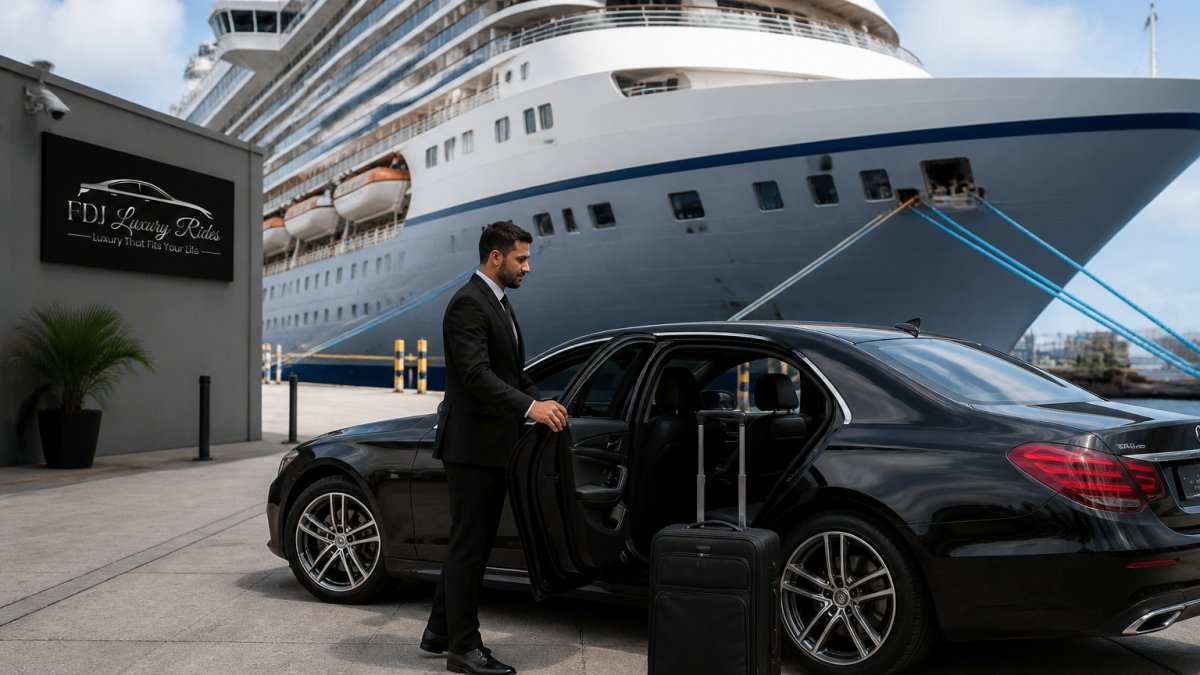
Table of Contents
- Why Luxury Transportation Matters for Cruise Port Travel
- Airport-to-Port Transfers: The Foundation of Stress-Free Cruise Departures
- Private Transportation to Port Tampa Bay and Other Florida Cruise Terminals
- Cruise Transfer Booking Checklist: What to Confirm Before Your Departure
- Cruise Port Pickup Timing: Coordinating Your Arrival and Departure
- Chauffeur Service Luggage Capacity: Planning for Your Cruise Essentials
- What Sets Professional Chauffeur Service Apart from Rideshare
- Conclusion
- Frequently Asked Questions
Last Updated: October 19, 2026
Why Luxury Transportation Matters for Cruise Port Travel
The journey to a cruise terminal sets the tone for your entire vacation. A stressful drive, a missed connection, or unfamiliar parking lots can drain your energy before you board.

That’s where luxury transportation for Florida cruise ports becomes a strategic investment in peace of mind. At FDJ Luxury Rides, the experience begins the moment you’re picked up, not when you reach your cabin.
Cruise travel involves tight timing, heavy luggage, and many moving parts. A professional chauffeur eliminates the variables rideshare introduces: unpredictable wait times, shared rides, and drivers unfamiliar with terminal procedures. You get a dedicated driver who knows the airports, terminals, and fastest routes through Florida traffic.
Arriving calm versus frazzled matters. Travelers who use professional chauffeur services report feeling more relaxed before boarding. You’re not wrestling with parking, rental car returns, or unfamiliar roads, so your focus stays on the adventure ahead.
Airport-to-Port Transfers: The Foundation of Stress-Free Cruise Departures
The airport-to-terminal leg is the critical first step of your journey, and most travelers underestimate it. You’re arriving with luggage, possibly jet-lagged, against a departure timeline that won’t wait.
Professional airport-to-port transfers handle the logistics. A chauffeur meets you at baggage claim with a nameplate, loads your luggage, and drives directly to your cruise terminal, with no rideshare wait and no confusion about which terminal or drop-off location.
Route matters too. Traffic around major airports shifts throughout the day, and an experienced driver knows which routes avoid congestion during peak cruise departure times. Saving 25 minutes can be the difference between boarding on schedule and missing your ship.
FDJ Luxury Rides specializes in airport transfers throughout Florida. Whether you land at a major hub or a regional airport, real-time flight tracking ensures your driver knows exactly when you’re landing, and a professional chauffeur meets you with five-star reliability.
Private Transportation to Port Tampa Bay and Other Florida Cruise Terminals
Florida’s major cruise ports each have distinct layouts, traffic patterns, and entry procedures. Understanding which terminal you’re departing from matters, because the route, timing, and drop-off point differ for each. The guide below compares the three highest-volume cruise ports so you can plan the right pickup and buffer time.
Port Tampa Bay (Tampa)
Port Tampa Bay serves central Florida and is the closest major cruise port to the Tampa Bay area. Terminals sit along the Hillsborough Bay waterfront, with Channelside-area terminals handling most passenger sailings.
Port of Miami (Miami)
Port of Miami is among the busiest cruise ports in the world by passenger volume. Its terminals are numbered, and each cruise line operates from a specific one; arriving at the wrong terminal costs time and stress, especially on weekends when several ships sail at once.
Port Everglades (Fort Lauderdale)
Port Everglades spans multiple terminals across a large Broward County facility. Congestion can be severe during peak departures, particularly Fridays and Saturdays when multiple ships sail at once. The port has separate entrances for different terminals, and the correct one depends on your cruise line’s assignment.
How the ports compare for planning
| Port | Region | Terminal layout | Typical planning buffer |
|---|---|---|---|
| Port Tampa Bay | Central Florida (Tampa Bay) | Waterfront terminals separated by cruise line; distinct parking and pickup zones | 20-30 minutes beyond drive time |
| Port of Miami | South Florida (Miami-Dade) | Numbered terminals; bridge and tunnel access; heavy weekend traffic | 30-45 minutes beyond drive time on peak days |
| Port Everglades | South Florida (Broward) | Multiple terminals across a large facility; separate entrances by terminal | 30-45 minutes beyond drive time on peak days |
Buffers are planning estimates, not guarantees. Confirm your cruise line’s recommended arrival window before booking.
What to confirm before you book
- Your cruise line and the specific terminal assigned to your sailing.
- The correct port entrance and passenger drop-off zone for that terminal.
- Whether your pickup is curbside at the terminal or at a designated passenger loading area.
- The expected disembarkation window for your return pickup, since ships often clear passengers over a 1-2 hour period.
Private transportation to any of these terminals means your driver knows the facility, traffic patterns, and procedures. You arrive at the correct entrance, at the optimal time, with luggage ready to unload, which is what separates a professional chauffeur service from improvised alternatives.
If you are sailing from Tampa Bay, book your pickup with the terminal assignment in hand. Terminal assignments can change closer to sailing, so reconfirm the terminal number 24-48 hours before departure.
Cruise Transfer Booking Checklist: What to Confirm Before Your Departure
Booking your cruise transfer requires attention to detail. Missing one item can create complications on departure day.
Confirm your cruise line and terminal. Your booking confirmation specifies your terminal. Verify it with your chauffeur service before travel day; a quick call prevents confusion.
Provide accurate pickup location and time. Share the exact address and preferred pickup time, factoring in traffic and airport procedures. Most cruise lines recommend arriving 2-3 hours before departure.
Communicate any special requirements. Car seats, mobility equipment, or extra luggage beyond standard suitcases should be shared upfront so your chauffeur can prepare the right vehicle.
Confirm luggage capacity. Cruise passengers often travel with multiple large suitcases. Verify your transportation can handle your total luggage volume; a luxury SUV or sedan handles cruise luggage differently than a compact car.
Request real-time communication. Confirm how your driver will contact you on arrival day, whether by call, text, or notification, so there’s no confusion about pickup timing.
Verify cancellation and change policies. Understand what happens if you need to reschedule or cancel; professional services offer flexibility for legitimate changes.
Ask about driver experience. How long has your chauffeur been driving cruise transfers? Do they know the terminals? Have they worked with your specific cruise line? Experience matters in execution.
Cruise Port Pickup Timing: Coordinating Your Arrival and Departure
Timing is where amateur planning falls apart. Cruise lines enforce strict departure policies: if you’re not onboard when the ship leaves, it leaves without you.
Most cruise lines require passengers to arrive 2-3 hours before departure for check-in, security, and boarding. If your ship departs at 5 PM, arrive by 2 PM at the latest.
Working backward from that deadline, a professional chauffeur calculates pickup time based on traffic conditions, time of day, day of week, and the terminal’s congestion patterns. Friday afternoon traffic to Port Everglades differs dramatically from Tuesday morning traffic.
A chauffeur with local knowledge builds in buffer time, arriving early enough that you’re checked in with time to spare but not so early you’re sitting in the terminal for hours.
Return pickups work similarly. Ships typically dock in the morning, and passengers disembark over a 1-2 hour window. Your chauffeur confirms your expected disembarkation time, accounts for clearing the terminal, and arrives when you’re ready to depart.
Chauffeur Service Luggage Capacity: Planning for Your Cruise Essentials
Cruise passengers pack differently than typical travelers: everything for a week or more at sea, plus formal wear, casual wear, and specialty items for excursions. The right vehicle depends on two numbers: passengers riding and bags you’re bringing.
A typical cruise packing list includes:
- Multiple large suitcases (often 2-3 per person)
- Carry-on bags
- Day packs or small bags for excursions
- Specialty items like snorkel gear, formal shoes, or sports equipment
Passenger-and-bag capacity guide
Use this guide to match your group to the right vehicle class. Capacity varies by vehicle model and configuration, so treat these as planning ranges and confirm exact capacity when you book.
| Vehicle class | Typical passengers | Typical large bags | Best for |
|---|---|---|---|
| Sedan | 1-3 | 2-3 | Couples or solo travelers with light luggage |
| Luxury SUV | 1-4 | 4-6 | Couples or small families with standard cruise luggage |
| Full-size SUV or van | 1-6 | 6-8 | Families or groups with multiple large suitcases |
| Larger group vehicle | 7+ | 8+ | Multi-family groups or groups with specialty gear |
Ranges are planning estimates. Actual capacity depends on the specific vehicle assigned and how luggage is packed.
How to calculate your needs
- Count passengers, including children in car seats.
- Count every bag, including carry-ons and day packs.
- Add one bag for specialty gear such as snorkel equipment or formal shoes.
- Share both numbers when you book so the right vehicle is assigned.
A standard sedan handles some cruise luggage, but not all. A luxury SUV or full-size vehicle provides the space cruise passengers actually need. Communicate your total luggage volume upfront so a professional service confirms the assigned vehicle fits everything without cramping passengers or creating safety issues.
FDJ Luxury Rides assigns vehicles based on passenger count and luggage requirements. A couple with two large suitcases gets different transportation than a family of four with five suitcases plus carry-ons, which prevents the awkward moment when your luggage doesn’t fit.
If your group is near the top of a vehicle class’s passenger or bag range, book the next size up. Cruise luggage often includes odd-shaped items that take more space than a standard suitcase.
What Sets Professional Chauffeur Service Apart from Rideshare
The differences between a professional chauffeur service and rideshare platforms run deeper than branding. They reflect fundamentally different business models and priorities.
Consistency and reliability. Rideshare depends on independent contractors accepting individual rides, so your driver might be on their first day or their last. Professional chauffeur services use vetted, trained, accountable drivers, so you’re not rolling the dice on who shows up.
Vehicle quality and maintenance. Rideshare vehicles vary wildly in condition and cleanliness. A professional chauffeur service maintains its fleet to specific standards, so you get a clean, well-maintained vehicle every time.
Knowledge and experience. A rideshare driver might be new to the area. A professional chauffeur has local knowledge of traffic patterns, terminal procedures, and optimal routes, and has navigated complications that catch first-time drivers off guard.
Accountability and insurance. Professional services carry commercial insurance that rideshare often doesn’t, so if something goes wrong there’s a clear chain of responsibility and coverage.
Flexibility. Rideshare is transactional: you request, they accept, the ride happens. Professional chauffeur services offer hourly options, advance booking, real-time adjustments, and communication rideshare doesn’t provide, so you’re not limited to point-to-point trips.
Privacy and professionalism. A professional chauffeur prioritizes your privacy and comfort. You’re not sharing the ride with strangers, and the driver is focused entirely on your experience.
At FDJ Luxury Rides, we’ve built our service around these principles: professionally trained drivers, meticulously maintained vehicles, and a commitment to reliability and elegance.
Conclusion
Your cruise vacation deserves transportation that matches its importance. The journey to the port sets the foundation for everything that follows. When you choose professional chauffeur service for luxury transportation for Florida cruise ports, you’re choosing peace of mind, reliability, and attention to detail.
FDJ Luxury Rides brings 10 years of combined industry knowledge to every transfer, with fully licensed, commercially insured service, real-time flight tracking, meticulously maintained vehicles, and professional drivers who know Florida’s cruise terminals inside and out. Book with us and arrive calm, on time, and ready to enjoy your vacation.
Florida cruise port information and procedures | Port Tampa Bay terminal details | Best practices for cruise travel planning
Frequently Asked Questions
How far in advance should I book private transportation to a cruise port?
Book your luxury transportation at least one week before your departure date. This ensures availability and allows your chauffeur service to coordinate real-time flight tracking and confirm pickup logistics. For major holiday periods or peak cruise season, booking two weeks ahead provides additional flexibility and peace of mind.
What information should I provide when booking a cruise transfer?
Provide your flight arrival time, cruise terminal name, number of passengers, luggage count, and any special requirements (car seats, mobility accommodations). Include your contact number and preferred pickup location. A professional chauffeur service will use flight tracking to monitor delays and adjust your pickup time automatically, ensuring you arrive at the cruise terminal with time to spare.
How much luggage can a luxury chauffeur service accommodate?
Chauffeur service luggage capacity depends on your vehicle type. Standard luxury sedans typically handle 2-3 large suitcases plus carry-on bags. Larger vehicles like SUVs or Suburbans accommodate significantly more luggage for families or group travel. Confirm specific luggage capacity when booking to avoid surprises on departure day.
What’s the difference between a professional chauffeur service and rideshare for cruise travel?
Professional chauffeur services offer dedicated drivers, never-shared rides, real-time flight tracking, and commercially insured vehicles maintained to premium standards. Your driver focuses entirely on your journey and can coordinate with cruise terminals. Rideshare relies on driver availability and surge pricing. For cruise port travel, a chauffeur service eliminates variables and ensures reliability when timing is critical.