

Why Professional Chauffeurs Are Safer for Late-Night Travel


Table of Contents
- The Safety Gap: Professional Chauffeurs vs. Other Options
- Background Checks and Driver Vetting: What Sets Professionals Apart
- Private Car Service vs. Rideshare Safety: A Critical Comparison
- Safety Standards for Luxury Car Services
- Real-Time Tracking, GPS, and Emergency Protocols
- Hiring a Private Driver for Airport Transfers: What to Verify
- Vehicle Maintenance and Mechanical Safety
- Conclusion
- Frequently Asked Questions
Last Updated: September 29, 2026
When you’re arriving home after a red-eye flight or heading to the airport at 3 a.m., the last thing you want is uncertainty about your ride. Late-night travel comes with real safety considerations, and why professional chauffeurs are safer for late night travel is a question that deserves a straight answer.
Late-night transportation requires trust and reliability. Professional chauffeurs operate under commercial insurance standards, rigorous background checks, and safety training that exceed rideshare platforms.
The Safety Gap: Professional Chauffeurs vs. Other Options
Late-night travel exposes you to vulnerabilities, fatigue, disorientation, reduced awareness. Professional chauffeur services eliminate key risk factors that rideshare cannot.
Rideshare drivers are independent contractors with minimal ongoing training and less rigorous vetting. Shared rides with strangers introduce unpredictability.
Professional chauffeurs are licensed operators under commercial liability, held accountable to a single company. Vehicles are regularly inspected, backgrounds thoroughly checked, and rides are never shared.
This distinction matters most during late-night hours. The professional model creates direct accountability; you’re booking a specific service with predictable standards, not relying on algorithmic matching.
Background Checks and Driver Vetting: What Sets Professionals Apart
Professional vetting goes far deeper than rideshare, directly impacting late-night safety through fundamentally different accountability structures.
The Rideshare Baseline: What’s Actually Checked
Rideshare platforms conduct basic checks for criminal history, driving violations, and sex offender registry status. This baseline filters obvious risks but misses behavioral patterns, employment instability, and fitness for professional transportation. A driver can pass and still have customer complaints or traffic violations. The platform’s limited liability model doesn’t require ongoing oversight.
Professional Chauffeur Vetting: Multi-Layer Screening
Professional services run comprehensive criminal background checks across federal, state, and local databases. Commercial liability exposure creates incentive for deeper screening than rideshare platforms.
Professional services review complete driving history including all violations, accidents, claims, and suspensions. For late-night travel on dark roads, this distinction is critical.
Professional services verify employment history and references to identify instability or termination for cause.
Professional services conduct pre-hire drug screening and ongoing compliance testing.
Some professional services require commercial driver’s licenses (CDLs), demonstrating additional knowledge of vehicle operation and passenger transportation standards.
Professional services maintain ongoing monitoring of driving records, customer feedback, criminal activity, and compliance.
Professional chauffeurs have direct company accountability and liability exposure, creating incentive for rigorous vetting and continuous monitoring. For late-night travel, this accountability difference is critical.
Private Car Service vs. Rideshare Safety: A Critical Comparison
| Factor | Private Car Service | Rideshare Platform |
|---|---|---|
| Driver Employment | Licensed contractor | Independent contractor |
| Background Check Depth | Multi-layer, ongoing monitoring | Basic criminal/driving check |
| Vehicle Maintenance | Regular scheduled inspections | Driver-reported issues |
| Insurance Coverage | Commercial liability required | Commercial coverage varies |
| Driver Training | Professional conduct standards | Minimal formal training |
| Ride Sharing | Private, never shared | Shared with other passengers |
| Accountability | Direct company responsibility | Distributed contractor liability |
| Late-Night Availability | Scheduled and reliable | Surge pricing, driver availability varies |
A professional car service operates under commercial transportation standards, which means higher insurance requirements, stricter safety protocols, and direct accountability.
For late-night travel, the private car service model is categorically safer. You’re booking a professional whose job depends on consistent, safe service.
Safety Standards for Luxury Car Services
Professional services maintain fleets to commercial standards with regular inspections, maintenance logs, and safety equipment checks. Driver training includes defensive driving, emergency protocols, and situational awareness. Commercial liability insurance is mandatory and verified, covering passenger safety and vehicle damage.
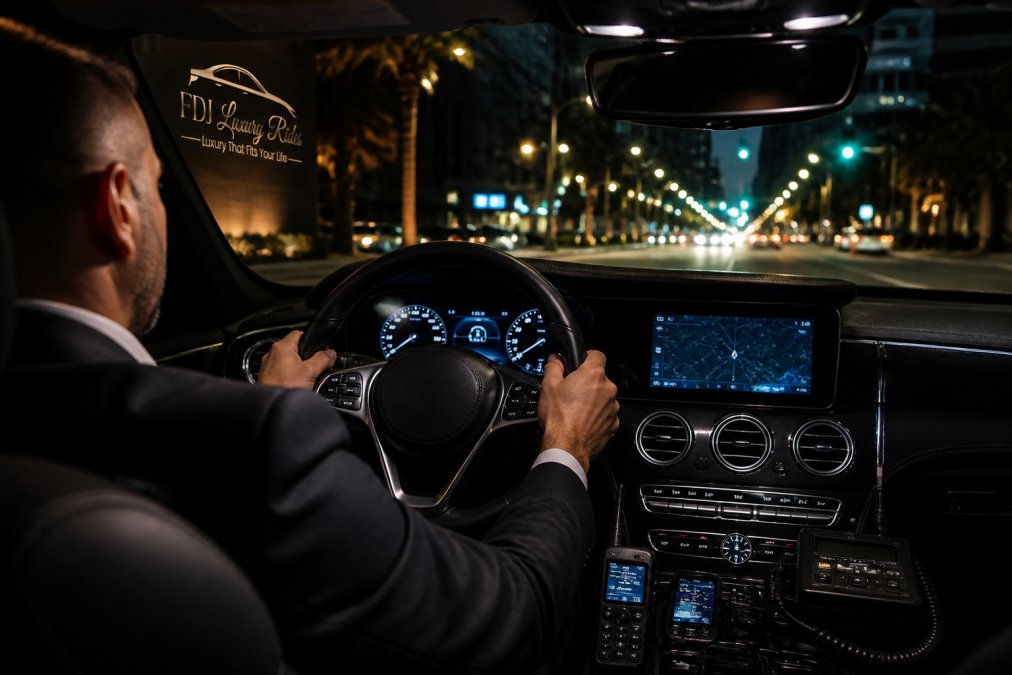
Real-Time Tracking, GPS, and Emergency Protocols
A professional chauffeur service provides real-time visibility and emergency response infrastructure that rideshare platforms cannot match. This distinction becomes critical during late-night travel when response time and human oversight directly impact your safety.
How Real-Time Tracking Works in Professional Services
Professional services maintain active dispatch oversight throughout your journey with real-time visibility of driver location, route, and status. The dispatch center intervenes if deviations or problems occur.
Emergency Protocols and Response Procedures
Professional car services maintain documented emergency procedures. These protocols cover multiple scenarios:
- Vehicle breakdown or mechanical failure: Your driver immediately contacts dispatch, which initiates a replacement vehicle or roadside assistance. You’re not left waiting on the side of the road while your driver figures out what to do.
- Accident or collision: Dispatch is notified immediately. The service coordinates with emergency services if needed, documents the incident, and arranges alternative transportation to your destination.
- Driver incapacity (illness, injury, or impairment): Dispatch recognizes the problem through communication or real-time monitoring and dispatches a replacement driver or emergency services.
- Passenger medical emergency: The driver is trained to contact emergency services and dispatch simultaneously, ensuring coordinated response.
- Security or safety concern: The driver can alert dispatch, which can contact law enforcement or provide immediate support.
Communication Infrastructure
Professional services maintain direct communication channels between drivers and dispatch. Your driver has a dedicated radio, phone line, or communication system that connects to a live person at the dispatch center.
During late-night hours, this communication infrastructure becomes a safety net. If your driver encounters heavy traffic and your arrival time shifts significantly, dispatch can proactively notify you. If weather conditions deteriorate, dispatch can communicate with your driver about route adjustments. If there’s a traffic accident blocking your planned route, dispatch can reroute your driver in real time rather than relying on GPS alone.
Accountability and Documentation
Every professional car service maintains detailed records of each ride: departure time, arrival time, route taken, driver identification, and any incidents or deviations. This documentation creates accountability. If something goes wrong during your ride, there’s a complete record that can be reviewed.
For late-night travel, this documentation matters. If you experience unsafe driving, inappropriate behavior, or any concern, the professional service has a complete record and can take immediate action.
Proactive Monitoring vs. Reactive Response
The key difference is proactive versus reactive. A professional dispatch center actively monitors your ride and intervenes before problems escalate.
During late-night hours when you’re tired and potentially vulnerable, proactive monitoring is a safety advantage. Your driver knows they’re being actively supervised. Dispatch knows your location and status. If something goes wrong, response is immediate rather than dependent on you recognizing the problem and reporting it through an app.
Hiring a Private Driver for Airport Transfers: What to Verify
Airport transfers are the most common late-night transportation need, and they’re also where safety matters most.
When hiring a private driver for airport transfers, verify these specific elements:
- Commercial insurance documentation (not just personal auto insurance)
- Current background check results or verification of vetting process
- Professional licensing or commercial driver qualifications
- Vehicle maintenance records and inspection dates
- Driver training certifications or safety course completion
- Dispatch center availability and emergency protocols
- Real-time tracking capabilities for your ride
- Clear cancellation and guarantee policies
Ask directly about their vetting process. A professional service will provide transparent information about how they screen drivers. If a company is vague about background checks or insurance, that’s a red flag.
For airport transfers specifically, verify that the service tracks your flight status. This prevents situations where you arrive at baggage claim and your driver hasn’t left yet. Real-time flight tracking means your driver is en route when you’re actually deplaning, not when your booking time arrives.
Also confirm that the service has backup drivers available. Airport transfers are time-sensitive. If your assigned driver becomes unavailable, you need immediate replacement, not a cancellation and rebooking.
Vehicle Maintenance and Mechanical Safety
The vehicle you’re traveling in during late-night hours directly impacts your safety.
Professional car services maintain their fleets to commercial standards. This means scheduled maintenance, documented repairs, and regular safety inspections. Every vehicle is inspected before it’s used for passenger transport.
A luxury sedan used for professional transportation has different maintenance requirements than a personal vehicle. Brakes are checked more frequently. Tires are rotated and inspected regularly. Suspension systems are tested. Climate control is maintained. These aren’t optional, they’re part of commercial vehicle operation.
Rideshare drivers are responsible for their own vehicle maintenance. There’s no guarantee that a vehicle you’re entering has been recently serviced. The driver might be ignoring warning lights. The tires might be near minimum tread depth. The brakes might be questionable.
Conclusion
Why professional chauffeurs are safer for late night travel comes down to structure, accountability, and standards. A professional car service operates under a different framework than rideshare platforms. Drivers are vetted more thoroughly. Vehicles are maintained to higher standards. Insurance coverage is comprehensive and mandatory. Emergency protocols are documented. Real-time oversight is built into the service model.
Frequently Asked Questions
What background checks are required for professional chauffeurs?
Professional chauffeur services conduct comprehensive background checks including criminal history screening, driving record verification, and reference checks. Many services also require multi-year driving history review and continuous monitoring. These vetting processes are far more rigorous than those used by rideshare platforms, which often rely on abbreviated checks. Ensuring passenger safety and security throughout every journey.
How does a private car service differ from standard rideshare apps in terms of safety?
Private car services employ dedicated drivers trained in professional conduct, passenger assistance, and emergency response. Drivers are background-checked, commercially insured, and accountable to a dispatch center that monitors routes in real-time. Private services offer door-to-door accountability, consistent driver profiles, and direct communication with management. For late-night travel, the professional structure of private services significantly reduces safety risks.
Are private chauffeur services safer for solo travelers at night?
Yes. Solo travelers benefit from professional chauffeur services through multiple safety layers: verified driver identity, real-time dispatch tracking, professional communication protocols, and emergency response procedures. Private services never match passengers with strangers through algorithms; your driver is pre-vetted and accountable to the company. Commercial insurance and documented incident protocols provide additional protection.
Why is professional vehicle maintenance critical for late-night safety?
Late-night driving increases exposure to mechanical failures, poor visibility, and emergency situations where vehicle reliability is essential. Professional chauffeur services maintain rigorous maintenance schedules including regular inspections, tire checks, brake servicing, and lighting verification. Well-maintained vehicles reduce breakdowns, prevent accidents caused by mechanical failure, and ensure climate control and communication systems function during emergencies.
If you’re managing airport transfers for executives, organizing corporate events, or simply need reliable late-night transportation, FDJ Luxury Rides provides the professional chauffeur service that prioritizes your safety and peace of mind. Our drivers are thoroughly vetted, our vehicles are meticulously maintained, and our dispatch team is available throughout your journey. Experience the difference that professional, accountable transportation makes.