

Navigate TPA Arrivals 2026: Step-by-Step Airport Guide


Table of Contents
- Understanding TPA’s Terminal Layout and Concourse Structure
- Step 1: From Aircraft to the Main Terminal
- Step 2: Locating TPA Baggage Claim After Landing
- Step 3: Checking Your TPA Flight Status and Baggage
- Step 4: TPA Arrival Pickup Instructions and Ground Transportation
- Step 5: How to Meet a Chauffeur at the Airport
- Accessibility, International Arrivals, and Special Considerations
- Frequently Asked Questions
Last Updated: October 21, 2026
Understanding TPA’s Terminal Layout and Concourse Structure
To navigate TPA arrivals, you need to understand that Tampa International Airport is not a single linear terminal. It is a main terminal building surrounded by separate airside buildings, and every arriving passenger has to move from an airside back to the main terminal before reaching baggage claim or the curb. Knowing that structure in advance is the difference between a five-minute walk and fifteen minutes of backtracking.
The airport’s public layout breaks down into three pieces you will actually use on arrival:
- The airsides. Gates are grouped into separate airside buildings labeled by letter. Each airside is a self-contained concourse with its own gate podiums, restrooms, and concessions. Your airline and flight number determine which airside you arrive into, and that letter is printed on your boarding pass and posted on arrival screens.
- The automated people mover. A driverless train system connects each airside to the main terminal. This is the primary way arriving passengers leave the gate area, you ride from your airside station to the main terminal station, then walk into the terminal building. Trains run continuously, so waits are usually short, but you should still budget a few minutes for the platform and ride.
- The main terminal. This is where baggage claim, ground transportation, rental car counters, and the exit doors are located. The main terminal is organized by level, with baggage claim and ground transportation below the ticketing and departure level. Arriving passengers move downward through the building.
A few practical consequences follow from this layout:
- You cannot walk from your gate to baggage claim. The airsides are physically separate from the main terminal, so the people mover is not optional, it is the route.
- Your airside letter matters. If you are being picked up or meeting someone, telling them your airside helps them understand where you are in the process. Once you are on the people mover, you are minutes from the main terminal.
- Signage is consistent. Directional signs use the airside letters and the main terminal as anchors, so following signs toward “Main Terminal” or “Baggage Claim” will keep you on the correct path.
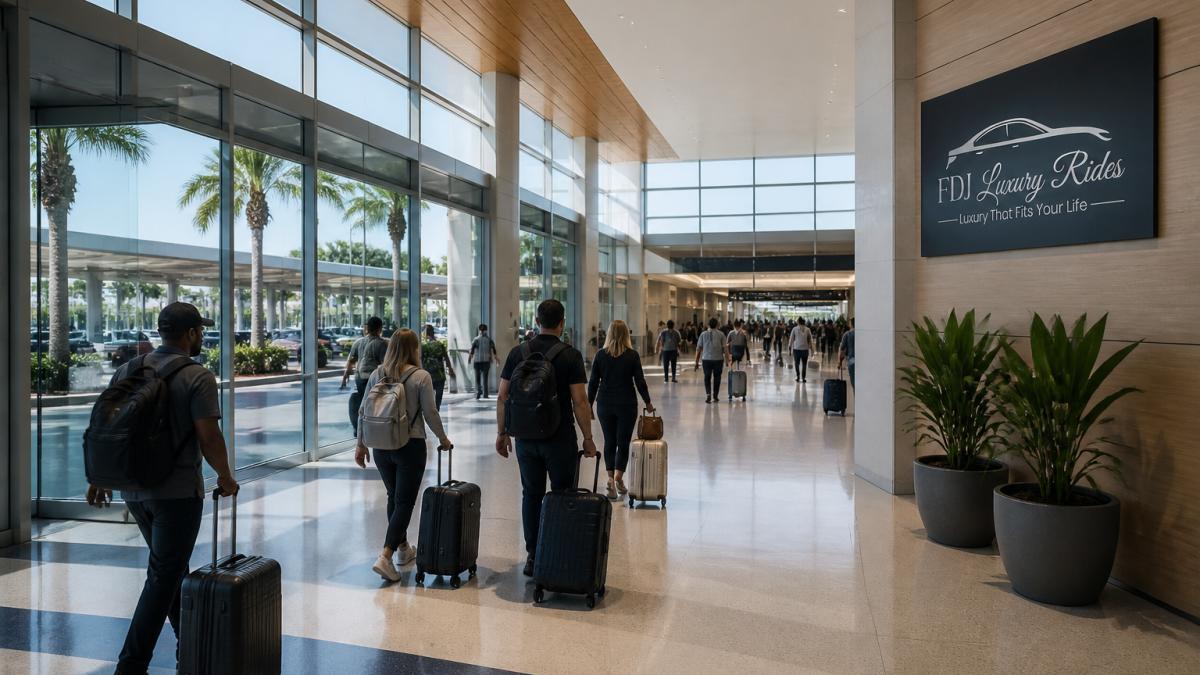
Before you land, pull up the airport’s interactive map on your phone and locate your arrival airside. Knowing whether you are arriving into Airside A, C, E, or F, and where that airside’s people mover station sits, removes the only real moment of confusion in the arrival process.
If you are connecting rather than terminating at the airport, the layout works in your favor: you stay within the airside system and do not need to enter the main terminal at all. Confirm your next gate on the arrival screens before you leave the aircraft.
Step 1: From Aircraft to the Main Terminal
This is the part of the arrival that most guides gloss over, and it is where first-time arriving passengers lose the most time. Here is the actual sequence from the moment the cabin door opens to the moment you step into the main terminal.
1. Deplane into the jet bridge. The jet bridge connects the aircraft directly to the airside building. Follow the flow of passengers; there is only one direction out.
2. Walk to the people mover station. Inside the airside, follow overhead signs toward the train or main terminal.
3. Ride the people mover to the main terminal. Board the train toward the main terminal. The ride itself is brief, typically a couple of minutes, and trains arrive frequently.
4. Exit into the main terminal and head down. Once you arrive at the main terminal station, follow signs toward baggage claim. You will move from the train level down toward the baggage claim level via escalators or elevators.
Timing expectations. From cabin door to main terminal, most arriving passengers should budget roughly 15 to 25 minutes: a few minutes to deplane, a few minutes to walk to the train, a short wait and ride, and a few minutes to walk down to baggage claim.
If you are connecting. Do not head to the main terminal. Connecting passengers stay within the airside system. As soon as you are off the aircraft, check the arrival screens for your next gate and confirm whether your connection departs from the same airside or a different one.
Peak arrival banks, mid-morning and late afternoon, put the most passengers on the people mover platforms at once. If you land during one of these windows, add five to ten minutes to your estimate and let your pickup contact know you may be slightly behind schedule.
The single most useful thing to know: at this airport, the people mover is the route from gate to baggage claim, not an optional shortcut. Plan your arrival timing around the train ride, not around a walking distance.
Step 2: Locating TPA Baggage Claim After Landing
The baggage claim area sits on the ground level of the main terminal. Signs clearly mark the route from the concourses to baggage claim. You’ll descend from the upper levels via escalators or elevators.
TPA baggage claim operates with multiple carousels. Your airline and flight number determine which carousel delivers your bags. Check the overhead display screens as you enter the baggage claim area, they show which flights are currently unloading at each carousel.
Bags typically begin arriving 15-25 minutes after the aircraft parks at the gate. Some flights deliver bags faster, especially domestic flights with fewer checked items. International flights may take longer due to customs processing.
Locate your airline’s baggage carousel and wait for your flight number to appear on the carousel display. Grab your bags and move to the exit area. If your bags don’t arrive within 30 minutes, contact your airline’s baggage services desk immediately.
Step 3: Checking Your TPA Flight Status and Baggage
Before you leave the baggage claim area, verify that all your bags arrived safely. Check your bags for damage. If a bag is missing or damaged, report it to your airline’s baggage services counter before leaving the airport.
Your airline’s baggage desk is located near the baggage claim carousels. Staff can immediately file a claim for missing or damaged luggage. Have your baggage tags and flight information ready when you approach the counter.
For flight status updates during your arrival, you have several options. Check the TPA airport website for real-time flight information. Most airlines also send SMS or email updates about delays and arrival times.
Always keep your baggage claim receipts until you’ve confirmed all bags arrived. Damaged bags should be reported before you leave the baggage claim area, waiting makes claims harder to file.
Step 4: TPA Arrival Pickup Instructions and Ground Transportation
After collecting your bags, head toward the ground transportation level. Exit signs clearly mark the route. You’ll descend to the ground level where pickup areas, rental car shuttles, and ground transportation options are located.
TPA has designated pickup zones for different services. Rideshare pickup operates in a separate area from curbside passenger pickup. Rental car shuttles depart from their own zones. Knowing which area you need prevents confusion and saves time.
The ground transportation level can feel overwhelming during peak travel times. Thousands of passengers move through this area daily. Stay focused on your destination and follow the overhead signage.
If you’re arranging a professional pickup with a service like FDJ Luxury Rides, your driver will be waiting in the designated pickup area. Most luxury chauffeur services use real-time flight tracking to monitor your arrival and coordinate timing. Your driver will have your name and contact information, making connection simple and stress-free.
Curbside pickup operates on a timed system. Drivers can wait in the curbside zone for limited time before being directed to circle back. If your driver isn’t immediately visible, call them with your location and bag count, this helps them prepare and coordinate your pickup efficiently.
Step 5: How to Meet a Chauffeur at the Airport
Meeting your chauffeur at TPA requires knowing where to go and how to communicate. Professional drivers from services like FDJ Luxury Rides use systematic approaches to airport pickups, ensuring you’re not left waiting or searching.
When you book your airport transportation in advance, provide your flight details to your service. Real-time flight tracking allows your driver to monitor delays and adjust arrival time accordingly. This means your driver arrives when you need them, not hours early.
Upon landing, text or call your driver with your location. Let them know you’ve collected your bags and are heading to the pickup area. Professional drivers will confirm they’re en route or already waiting.
Look for your driver holding a sign with your name or in the designated luxury vehicle pickup area. Most professional chauffeur services park in premium pickup zones designed for private transportation. These zones are separate from rideshare and general passenger pickup areas, making them easier to locate.
Have your contact information and driver details readily available on your phone. A quick call or text confirms you’ve connected with the right driver. This direct communication eliminates confusion and gets you on the road quickly.
Accessibility, International Arrivals, and Special Considerations
TPA provides accessibility services for passengers with mobility challenges. Wheelchair assistance is available upon request. Accessible restrooms and elevators are clearly marked throughout the terminal.
If you need mobility assistance, inform your airline before landing. Staff will meet you at the aircraft door with a wheelchair or mobility device. They’ll accompany you through the terminal to baggage claim and ground transportation.
International arrivals follow a different route through customs and immigration before reaching the main baggage claim area. Allow extra time for this process. Customs screening can add 30-60 minutes depending on flight volume and passenger count.
When traveling internationally, have your passport and customs declaration form ready. Follow signage toward the international arrivals area. This separate pathway processes international passengers efficiently.
For special occasions or corporate events requiring coordinated transportation, professional services like FDJ Luxury Rides can arrange multiple vehicles and timing. Whether you’re organizing an executive arrival or a family reunion, advance coordination ensures seamless ground transportation for all passengers.
Business travelers and corporate groups needing reliable, coordinated airport transportation. Professional chauffeur services eliminate the stress of navigating TPA and arranging ground transportation during complex multi-passenger arrivals.
Once you understand the terminal flow and ground transportation options, you can navigate TPA arrivals with confidence. From deplaning to baggage claim to pickup, the process follows a logical sequence designed to move thousands of passengers daily.
The key to a stress-free arrival is preparation. Know your baggage carousel location, understand the ground transportation layout, and arrange your pickup in advance. When you book professional airport transportation through FDJ Luxury Rides, you gain the added benefit of real-time flight tracking and a dedicated driver who handles timing and coordination. Our fully licensed, commercially insured chauffeurs specialize in punctual, professional airport pickups throughout Florida. Book your TPA arrival transportation with us and experience the difference reliable, luxury ground transportation makes.
Frequently Asked Questions
Where do I pick up my checked baggage at TPA?
After exiting the aircraft and walking through the concourse, follow signs to baggage claim on the ground level. Your airline posts your baggage claim carousel number on overhead displays near the escalators. Most arriving passengers reach baggage claim within 10-15 minutes of landing. If your bag hasn’t appeared after 30 minutes, contact your airline’s baggage service desk immediately.
How do I check my flight status at TPA?
Use the airport’s website or your airline’s app to track real-time flight status and baggage information. Once you land, baggage carousels are clearly marked with flight numbers and carousel assignments. Airport staff can also direct you if you’re unsure which carousel to use.
How do I meet my chauffeur after landing at TPA?
Confirm your chauffeur’s name and vehicle details before landing. Exit baggage claim and proceed to the ground transportation level. If you’ve booked a professional chauffeur service, your driver will typically hold a sign with your name or be waiting near the designated pickup zone. Communicate your exact location by phone if needed. Professional drivers track flights in real time, so they’ll be ready when you arrive.
What’s the difference between TPA’s arrival procedures and other major airports?
TPA’s single-terminal design makes arrivals straightforward: aircraft gate → concourse → main terminal → baggage claim → ground transportation. There’s minimal walking compared to multi-terminal airports. The airport’s clear signage and logical flow mean most travelers reach their pickup point without confusion. Professional chauffeur services familiar with TPA can coordinate pickups efficiently because the layout is predictable.