

How to Create a Wedding Guest Transportation Schedule


Table of Contents
- Assess Your Guest Count and Transportation Needs
- Calculate Vehicle Capacity and Required Trips
- Determine Wedding Guest Pickup Times and Locations
- Build Your Wedding Transportation Schedule Template
- Plan Transportation Between Multiple Wedding Venues
- Communicate Schedule Details to Your Wedding Guests
- Account for Delays and Build in Buffer Time
- Coordinate Day-of Execution and Contingencies
- Frequently Asked Questions
Last Updated: October 15, 2026
Assess Your Guest Count and Transportation Needs
A wedding guest transportation schedule starts with one question: how many people need rides, and where are they coming from?
Review your guest list. Not everyone needs transportation, some drive themselves or arrive with family. Focus on those who’ve indicated they need a ride: out-of-town visitors, elderly guests, those flying in, and anyone staying at a hotel block.
FDJ Luxury Rides has experience coordinating transportation for weddings across Florida. The most common mistake is overestimating demand, couples assume all guests need rides, then book vehicles they don’t use. Add one question to your RSVP card: “Will you need transportation?”
Next, identify your key pickup points. Most weddings have two: a hotel and the ceremony venue. Some add a third, the airport. Map these locations and note the distance between them; it directly affects your timeline and vehicle needs.
Document guests with special needs: elderly relatives, guests with mobility challenges, families with small children. They may need different vehicle types or extra loading time, so flag them now.
Ask guests to confirm their pickup location when they RSVP. A guest staying at Hotel A but wanting pickup from Hotel B will throw off your timing if you don’t know in advance.
Calculate Vehicle Capacity and Required Trips
Vehicle capacity determines how many trips you’ll need to move all your guests.
A standard sedan holds 4-5 passengers comfortably, and a luxury SUV or town car fits 6-7. The math is straightforward: divide your total guest count by vehicle capacity, then round up.
Example: 60 guests and one vehicle seating 6 means a minimum of 10 trips (60 ÷ 6 = 10). In reality you’ll need more, because guests don’t all arrive at once, some trips run half-full, you need buffer trips for late arrivals, and return trips take time. A realistic number is 12-15 trips, build in 20-30% extra capacity.
Decide between one vehicle making multiple loops (simpler, slower) or several working simultaneously (faster, but more drivers and communication).
| Scenario | Guest Count | Vehicle Capacity | Minimum Trips | Realistic Trips |
|---|---|---|---|---|
| Small wedding | 30 | 6 | 5 | 7-8 |
| Medium wedding | 60 | 6 | 10 | 12-15 |
| Large wedding | 120 | 6 | 20 | 24-30 |
| Large wedding (2 vehicles) | 120 | 6 each | 10 | 12-15 |
The second vehicle cuts your trip count in half, so guests spend less time waiting.
Two vehicles working simultaneously are nearly always worth the cost. They cut wait times dramatically and reduce stress on your day-of coordinator.
Determine Wedding Guest Pickup Times and Locations
Pickup timing is where most wedding guest transportation schedules fall apart.
If your ceremony starts at 4 p.m., guests should arrive by 3:45 p.m. If the venue is 20 minutes from the hotel, pickups must start at 3:25 p.m.
Guests don’t arrive at the hotel at the same time, some check in at noon, others at 3 p.m., so you can’t ask everyone to gather in the lobby at 3:25 p.m.
Instead, open your pickup window 90 minutes before the ceremony. For a 4 p.m. ceremony, start pickups at 2:30 p.m. and post a clear message: “Pickups begin at 2:30 p.m.
The window prevents bottlenecks: guests ready at 2:30 p.m. get picked up immediately, and later arrivals can join a 3:10 or 3:20 p.m. trip.
For the return trip, timing is more flexible.
Factor in travel time: a 20-minute drive means the vehicle is gone 40 minutes round trip, plus 5-10 minutes for loading and unloading, about 50 minutes per round trip.
Never schedule pickups closer than 10 minutes apart. Drivers need time to load passengers, confirm everyone is aboard, and drive to the next pickup location. Tighter intervals create cascading delays.
Build Your Wedding Transportation Schedule Template
A written schedule is non-negotiable. It’s your roadmap for the day and your safety net if things go wrong.
Start with a simple spreadsheet or table. Include these columns:
- Trip number
- Scheduled departure time from pickup location
- Estimated arrival time at destination
- Vehicle/driver assigned
- Passenger names or count
- Special notes (elderly guest, child car seat, accessibility needs)
Here’s what a sample schedule looks like for a 4 p.m. ceremony with pickups from one hotel:
Hotel to Ceremony (Afternoon Pickups)
| Trip | Depart Hotel | Arrive Ceremony | Driver | Passengers | Notes |
|---|---|---|---|---|---|
| 1 | 2:30 p.m. | 2:50 p.m. | Driver A | 5 | Elderly couple, one mobility device |
| 2 | 2:45 p.m. | 3:05 p.m. | Driver B | 6 | Family with young child |
| 3 | 3:00 p.m. | 3:20 p.m. | Driver A | 4 | Standard group |
| 4 | 3:15 p.m. | 3:35 p.m. | Driver B | 5 | Standard group |
| 5 | 3:30 p.m. | 3:50 p.m. | Driver A | 3 | Late arrivals |
This template shows when each vehicle departs, who’s aboard, and any special requirements. Give copies to drivers and your day-of coordinator, and post it in the hotel lobby.
Build in flexibility: add one extra trip at the end labeled “Standby / Late Arrivals” so a vehicle is ready if guests show up late.
For the return trip, create a similar table. Note the reception end time, final shuttle departure, and any guests who arranged separate transportation.
Plan Transportation Between Multiple Wedding Venues
Many weddings span multiple locations: a ceremony at a church, a reception elsewhere, and sometimes a rehearsal dinner the night before.
Map these moves clearly, each location change needs its own transportation segment.
Start with a timeline of your entire event:
- 5 p.m.: Ceremony ends
- 5:30 p.m.: Cocktail hour at reception venue
- 6:30 p.m.: Dinner service
- 10:30 p.m.: Reception ends
Between the ceremony and reception, guests need a ride from the church to the reception venue. Open a pickup window at the ceremony venue starting at 5:10 p.m. (10 minutes after the ceremony ends) and run vehicles every 15 minutes until 5:45 p.m.
For the return trip from reception to hotel, post a final departure time and announce it during toasts. A typical final departure is 11:30 p.m. or midnight.
If guests stay at multiple hotels, you may need a loop: Reception → Hotel A → Hotel B → Hotel C → Hotel A. Calculate total loop time (driving plus loading at each stop), then schedule departures every 30-45 minutes.
Document each leg of the journey separately. A guest should never wonder whether their ride covers the ceremony-to-reception move or only the reception-to-hotel return.
Communicate Schedule Details to Your Wedding Guests
Clear communication prevents most day-of transportation problems.
Include transportation details in your wedding website. Create a dedicated page with:
- Pickup locations (hotel address, specific entrance or lobby area)
- Pickup times (opening time and closing time of the window)
- Ceremony venue address and expected arrival time
- Reception venue address
- Return shuttle times and final departure time
- Special instructions (e.g., “Please be ready 15 minutes before your preferred pickup time”)
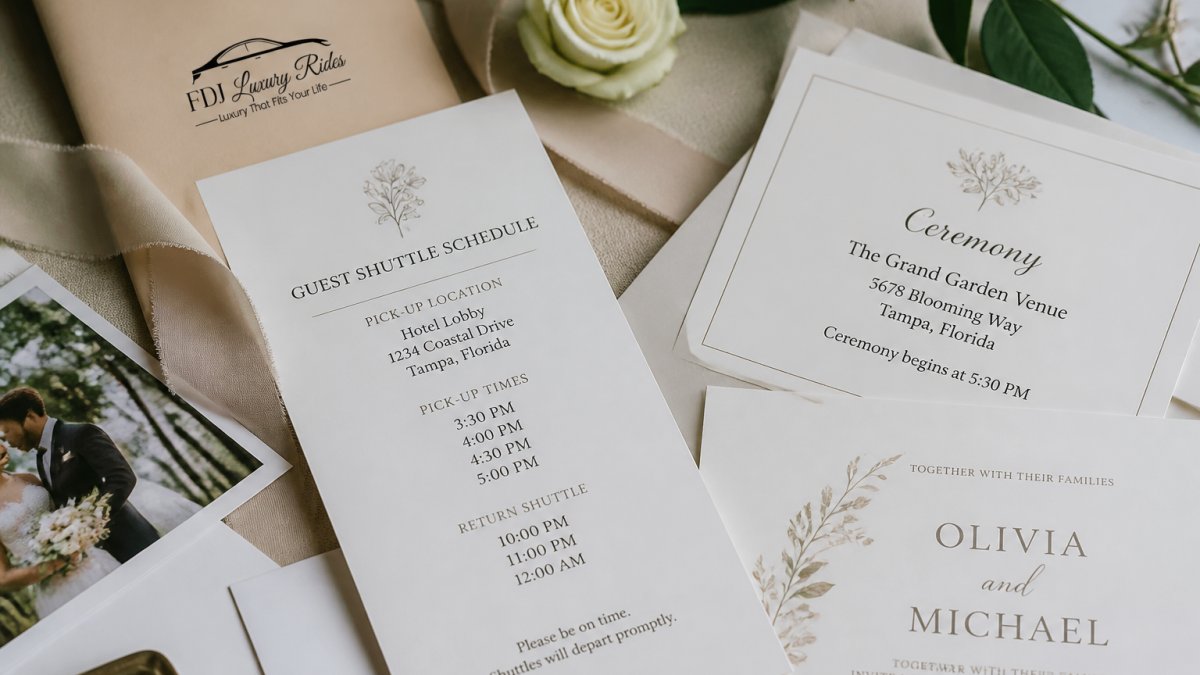
Include a transportation insert with your printed invitations stating:
- “Complimentary transportation will be provided for all guests”
- Hotel pickup location and time window
- Ceremony venue address
- Reception venue address
- Return trip times
- A contact number for questions (your wedding planner’s or coordinator’s phone)
Send a reminder email one week before the wedding with the same information plus: “Please confirm your transportation needs by [date]. If you prefer to arrange your own ride, let us know.”
Send a final reminder 48 hours before the wedding, when guests review details and make last-minute decisions. Include:
- Exact pickup time for their group (if assigned)
- Hotel lobby meeting point
- Ceremony start time
- Cell phone number to call if they’re running late
Use simple, direct language so a guest can read your instructions once and know exactly what to do.
Guests who are unfamiliar with the area and arriving by plane. They have no context for drive times or location names. Be extra specific: “The hotel lobby is on the main floor, near the front desk. Look for the sign that says ‘Wedding Shuttles.’ Our driver will be there at 2:30 p.m.”
Account for Delays and Build in Buffer Time
No schedule survives contact with reality unchanged.
The standard rule: add 20-30% extra time to each leg. A 20-minute drive becomes 25-26 minutes; 5 minutes of loading becomes 7.
Add a 15-minute buffer before the ceremony: if guests need to arrive by 3:45 p.m., schedule your last pickup to depart the hotel by 3:15 p.m.
For the reception, add a 30-minute buffer to your final departure time. If you announce “Last ride at 11:30 p.m.,” plan a backup vehicle for midnight to catch stragglers without leaving anyone stranded.
Have a backup plan for vehicle failure. Keep a second transportation provider’s contact information with your day-of coordinator. A professional provider like FDJ Luxury Rides can respond quickly.
Account for weather: rain or storms slow traffic and loading, so add 10-15 minutes to your estimates in bad conditions.
Document your contingency plan in writing. Your day-of coordinator should know what to do if a vehicle breaks down, how to reach the backup provider, whether to delay the ceremony if guests are stuck in traffic, and how to communicate delays to guests at the venue.
Coordinate Day-of Execution and Contingencies
The best schedule means nothing if your team doesn’t execute it.
Brief your drivers the day before. Give each one:
- A printed copy of the schedule with their assigned trips
- Passenger names or group descriptions
- Hotel pickup location and ceremony venue address
- Ceremony start time and any known delays
- Cell phone numbers for your coordinator and venue contact
- Instructions for late passengers (wait 5 minutes, then depart)
Create a simple communication protocol: your coordinator texts or calls drivers with updates, and drivers confirm each pickup and arrival. This real-time feedback prevents confusion.
Have your coordinator arrive at the hotel 30 minutes before the first pickup to confirm the lobby is ready, brief hotel staff, test communication with drivers, and greet early arrivals.
During pickups, your coordinator monitors the schedule.
At the venue, confirm arrivals with your ceremony coordinator or venue contact, and tell them when to expect the final group.
For the return trip, assign the same coordinator or a backup to manage departures. Post the final departure time prominently and announce it during toasts and again as the reception winds down.
Creating a wedding guest transportation schedule takes planning, but the payoff is enormous: guests arrive on time and stress-free, and your day runs smoothly because the logistics are handled in advance.
FDJ Luxury Rides specializes in coordinating complex multi-vehicle transportation for events across Florida, with 10 years of combined industry knowledge managing timelines and guest needs. When you’re ready to execute your plan with professional drivers and meticulously maintained vehicles, Book Now and let us handle the logistics so you can focus on your celebration.
Frequently Asked Questions
How much time should you allow for wedding guest pickups?
Plan 10-15 minutes per pickup location to account for guests gathering, loading luggage, and brief delays. For hotel pickups with multiple guests, add 20-30 minutes total. Build in an additional 15-minute buffer before your first scheduled departure to handle late arrivals. The total pickup window depends on your guest count and number of locations, a typical wedding with 50-75 guests spread across 2-3 hotels usually requires 45-75 minutes for complete pickups.
What information should a wedding transportation schedule template include?
Your wedding transportation schedule template should list: pickup location and hotel name, scheduled departure time, estimated arrival time at the venue, vehicle type and capacity, driver contact information, guest count for that trip, and any special requirements (wheelchair access, car seats, dietary restrictions). Include a backup contact number and a note about what to do if running late. Share this with guests at least two weeks before the wedding so they know exactly when to be ready.
How do you estimate how many trips your wedding guest transportation will need?
Divide your total guest count by vehicle capacity. If you have 80 guests and a luxury vehicle holds 6 passengers, you need at least 14 trips. However, account for multiple pickup locations and return trips: if guests are at two hotels and need pickup plus return service, plan for double the one-way trips. Also factor in timing, staggered departures mean some vehicles complete multiple loops. A professional transportation provider can help optimize routes to minimize total trips needed.
What should you do if the ceremony or reception runs late?
Build contingency time into your schedule from the start, add 30-45 minutes of buffer for unexpected delays. Assign a point person (wedding coordinator or best man) to contact your transportation provider immediately if the timeline shifts. Confirm with drivers that they’ll wait at the venue for return pickups, and establish a clear communication protocol. Most professional transportation services monitor delays and adjust subsequent pickups automatically, but direct communication prevents confusion and ensures guests aren’t left waiting.