

How Long Does TPA Pickup Take? A Step-by-Step Guide


Last Updated: November 13, 2026
Quick Summary
TPA pickup usually takes about 15 to 25 minutes from gate to curb for a carry-on-only passenger in a mid-cabin seat. Checked bags push that to roughly 30 to 45 minutes, and international arrivals can add customs time on top of baggage claim.
- Track the flight live so you know when the plane reaches the gate.
- Ask your passenger to text you once they have their bags in hand.
- Agree on a pickup signal before the driver enters the pickup area.
- The arrivals-level curb is a loading zone, so avoid leaving the vehicle unattended there.
Table of Contents
- What Determines How Long TPA Pickup Takes
- Step-by-Step TPA Pickup Workflow From Landing to Curb
- How Long Does TPA Pickup Take to Arrive by Scenario
- Choosing a Pickup Option: Curbside, Cell Phone Lot, or Short-Term Parking
- Parking Rules, Time Limits, and Unattended Vehicle Restrictions
- Planning Your Pickup With Flight Tracking and Peak-Period Timing
- Book Your Next TPA Transfer With FDJ Luxury Rides
- Frequently Asked Questions
What Determines How Long TPA Pickup Takes
Most people expect a quick curb meeting at Tampa International Airport, but the real wait depends on several factors. Your flight’s landing time, how far you have to walk from the gate, and where you agreed to meet all shape the total time.
The biggest factors are usually:
- Flight status: An early or late landing changes when your passenger reaches the curb.
- Deplaning speed: Full flights take longer to empty, especially with families and checked bags.
- Baggage claim: Waiting for luggage is often the longest single step.
- Pickup location: Arrivals-level curbside is faster than a cell phone lot trip.
- Traffic: Congestion near the terminal can add minutes to both the driver’s approach and the passenger’s walk.
Keep the difference between two timings in mind. The passenger’s time is how long it takes to reach the pickup point. The driver’s time is how long the vehicle spends getting in and out of the zone. Both matter when you plan.
Step-by-Step TPA Pickup Workflow From Landing to Curb
A clear sequence makes the wait predictable. Here is the usual path from touchdown to the car.
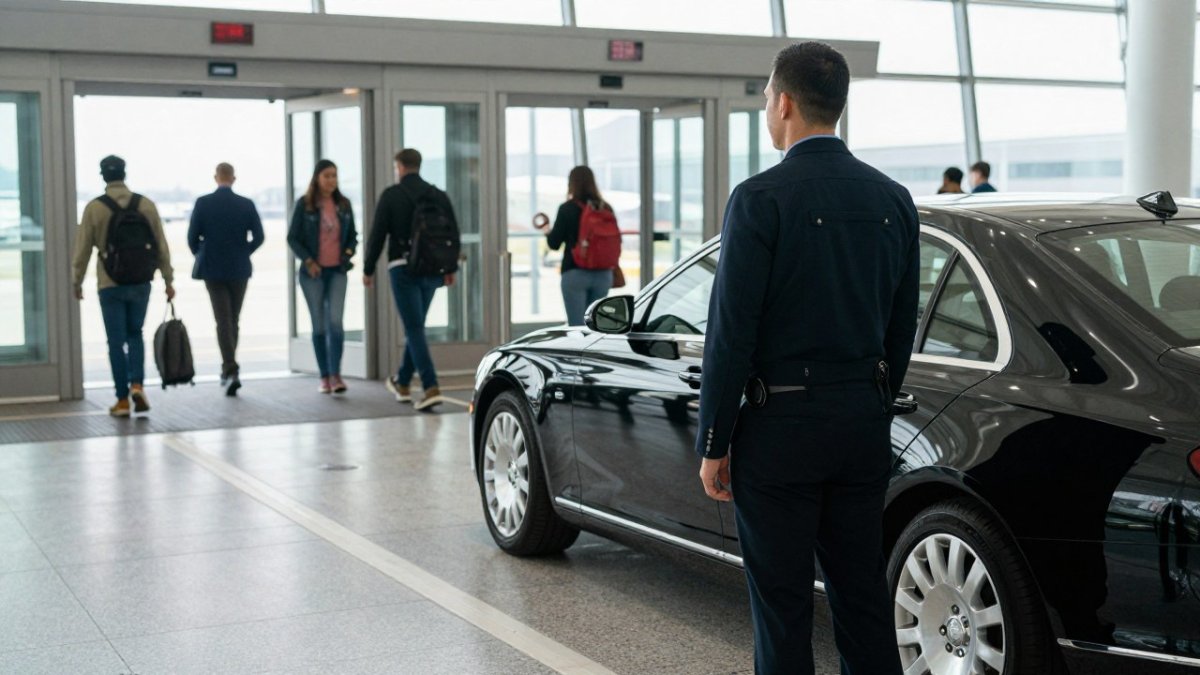
Landing and Deplaning
Once the plane lands, passengers still need to taxi to the gate and wait for the doors to open. Deplaning itself can take anywhere from a few minutes to much longer on a full aircraft. Check live flight status so you know when the plane is actually at the gate, not just when it touches down.
Baggage Claim and Terminal Access
After deplaning, passengers walk to baggage claim and wait for their bags. Then they head to the terminal exit to reach the pickup area. Ask your passenger to text you when they have their luggage. That single message removes most of the guesswork.
The usual path from touchdown to the car breaks into a few stages, each with its own time cost.
| Step | What to do | Time or frequency |
|---|---|---|
| Landing and deplaning | Check live flight status until the plane reaches the gate | Deplaning: a few minutes to much longer on full flights |
| Baggage claim | Walk to the carousel and wait for bags | Often the longest single step |
| Terminal exit | Text the driver when bags are in hand | Confirms the meeting point before the car arrives |
How Long Does TPA Pickup Take to Arrive by Scenario
The query most people actually have is a stopwatch question: from wheels-down to sitting in the car, how long is this going to take? No single number is right for every arrival, but you can build a realistic estimate by adding up the stages. A common pattern practitioners use is to separate the passenger’s clock (gate to curb) from the driver’s clock (entering, waiting, and exiting the pickup zone).
Passenger Time: Gate to Curb
These ranges reflect typical domestic arrivals at Tampa International and assume the passenger moves at a normal pace:
- Carry-on only, mid-cabin seat: Roughly 15 to 25 minutes from gate arrival to the arrivals-level curb. Deplaning and the walk to the exit dominate this window.
- Carry-on only, back of the plane: Add about 5 to 10 minutes for the slower deplaning line.
- Checked bags, bags already on the carousel: Plan on roughly 30 to 45 minutes. The walk to baggage claim plus the carousel wait is usually the longest single step.
- Checked bags, bags delayed or a full flight: Budget 45 to 60 minutes or more. Oversized items, sports equipment, and strollers add time at the claim area.
- International arrivals: Add customs and immigration processing on top of baggage claim; a realistic window is often 45 to 75 minutes depending on the queue.
- Mobility assistance or a traveler needing extra time: Add 15 to 30 minutes. Wheelchair service is usually requested at booking, and the wait for an attendant can vary with how many arrivals are happening at once.
Driver Time: Entering, Waiting, and Exiting
Once the passenger is at the curb, the driver’s side of the clock is usually short, though it can stretch during peak periods. The arrivals-level curb is a loading zone, not a parking spot, so the vehicle needs to be moving through rather than sitting. If the passenger is not yet outside, the driver should loop or wait in the cell phone lot rather than idle at the curb.
Putting It Together
The actual time depends on the flight, the crowd, and how quickly the passenger reaches the agreed meeting point. Add time for international arrivals, mobility needs, and peak-period congestion.
Watch out: If the passenger texts “I’m here” before they actually have their bags, the driver may arrive at the curb too early and be forced to circle, which adds time rather than saving it. Agree on a signal, bags in hand, at the exit door, before the driver enters the pickup area.
Typical passenger time from gate to curb by scenario
Choosing a Pickup Option: Curbside, Cell Phone Lot, or Short-Term Parking
Each pickup option has tradeoffs in time and convenience. Curbside pickup at the arrivals level is typically the most direct choice for a passenger with luggage. See how the new curbside lanes work for the latest changes at the arrivals level. Meeting in the cell phone lot can work well when the passenger wants to avoid crowds, though it adds a step. Short-term parking gives you more control if you need to wait with the vehicle.
Our team at FDJ Luxury Rides can help you match the option to your passenger. For a quick look at how the new express curbside fits into your plan, see Why Everyone is Talking About TPA’s New Express Curbside.
Parking Rules, Time Limits, and Unattended Vehicle Restrictions
Pickup timing is shaped as much by the rules as by the flight. The difference between a smooth pickup and a ticket or tow usually comes down to knowing where a vehicle is allowed to sit and for how long.
The Arrivals-Level Curb
The arrivals-level curb is a live loading zone. Vehicles are expected to load passengers and move on, not to park and wait. Drivers who leave a car unattended at the curb, even briefly, risk a citation or a tow. The practical rule: the passenger should be standing at the curb with bags in hand before the vehicle pulls up.
The Cell Phone Waiting Lot
The cell phone waiting lot exists precisely so drivers do not have to idle at the curb. It is a free place to wait until the passenger calls or texts that they are outside. The trade-off is a short drive from the lot back to the terminal, so the driver should start moving when the passenger says they are at the exit, not when the plane lands. Posted time limits apply, and the lot is for waiting vehicles with drivers present, not for leaving the car and going inside.
Short-Term Parking
Short-term parking in the terminal garages is the option that lets a driver actually leave the vehicle and meet a passenger inside. It is billed by time, and the garage is the right choice when the passenger needs help with luggage, is arriving international, or needs extra time. Check the posted rates at the garage entrance before pulling in, and keep the ticket with you.
Unattended Vehicle Rules
Leaving a vehicle unattended in a restricted zone, the curb, a fire lane, a no-parking area, is the fastest way to get towed. Even in a legal space, leaving the engine running and the car empty in a loading zone invites enforcement. If the driver needs to go inside, the vehicle belongs in a garage, not at the curb.
Watch out: A driver who parks in the cell phone lot and walks to the terminal to meet a passenger is treating a waiting area as a parking garage; the lot is for vehicles with drivers present, and enforcement can ask an unoccupied car to move.
Matching the Rule to the Timing
If the passenger is carry-on only and moving quickly, the curb is the fastest legal option, provided the driver times the approach to the passenger’s text. If bags are checked or the arrival is international, short-term parking is usually the lower-stress choice because it removes the pressure to circle. The cell phone lot sits in between: free, legal, and best when the driver wants to wait without committing to a garage rate.
Planning Your Pickup With Flight Tracking and Peak-Period Timing
Real-time flight tracking is one of the most useful tools for timing your pickup. A delay of 20 minutes changes your entire plan, so track the flight from the moment it departs. Peak periods, such as holidays and busy weekday evenings, can also stretch both the walk and the wait.
For tips on avoiding delays and surge pricing around peak times, read Avoid Airport Pickup Delays and Surge Pricing at TPA.
Book Your Next TPA Transfer With FDJ Luxury Rides
FDJ Luxury Rides offers private, commercially insured airport transfers with real-time flight tracking and vehicles that are never shared. You can request a dedicated chauffeur for your next arrival and skip the guesswork of timing your own pickup. Pricing depends on your trip details, so contact us for a quote and visit airport transfers to Tampa International Airport to see what we offer.
Frequently Asked Questions
How long does TPA pickup take to arrive after a flight lands?
How quickly an arriving passenger reaches the pickup point depends on how quickly the aircraft reaches a gate, how fast the passenger deplanes, and how long bags take to appear at baggage claim. Passengers traveling with only carry-on luggage often reach the curb faster than those waiting for checked bags. Tracking the flight in real time helps both the passenger and the driver time the pickup so neither waits long at the curb.
Should I meet arriving passengers at the Red or Blue baggage claim?
Passengers should follow the airport signage after deplaning to reach the correct baggage claim area. Confirming the exact claim location with the passenger by text before the flight lands avoids confusion and keeps the pickup on schedule.
How long should you wait for a passenger after their flight lands at TPA?
Plan for the expected arrival time plus the time needed for deplaning, baggage, and walking to the pickup point. If the flight is delayed or the passenger has checked luggage, the wait can run longer. Monitoring flight status and communicating with the passenger keeps the wait predictable for everyone involved.